
In parallel to the diplomacy in Kuala Lumpur, the summit marked a historic milestone: Timor‑Leste’s accession to ASEAN as the bloc’s 11th member. After a decade-long path of reform, ratification and roadmap compliance, Timor-Leste’s membership was formalised, marking the first enlargement of the organisation since the 1990s.
The accession process illuminates how international organisational law and regional integration frameworks overlap. To join ASEAN, Timor-Leste had to commit to the ASEAN Charter, ratify dozens of legal instruments and demonstrate capacity across the three pillars of the Community: political-security, economic and socio-cultural.
For ASEAN, the expansion poses both opportunity and obligation. Integrating the region’s poorest economy into a bloc worth trillions bolsters inclusivity but also stretches institutional capacity. From a legal perspective, accession extends ASEAN’s normative reach: Timor-Leste now becomes both subject and partner of regional regulatory regimes, cross-border economic disciplines, and mutual cooperation obligations.
Ultimately, the twin developments of the Cambodia–Thailand peace treaty and Timor-Leste’s membership illustrate ASEAN at a crossroads: moving from flexible diplomacy toward a rule-based regional order. Underneath the summit’s spectacle lies a more profound legal narrative, one in which law is not just invoked, but operationalised.
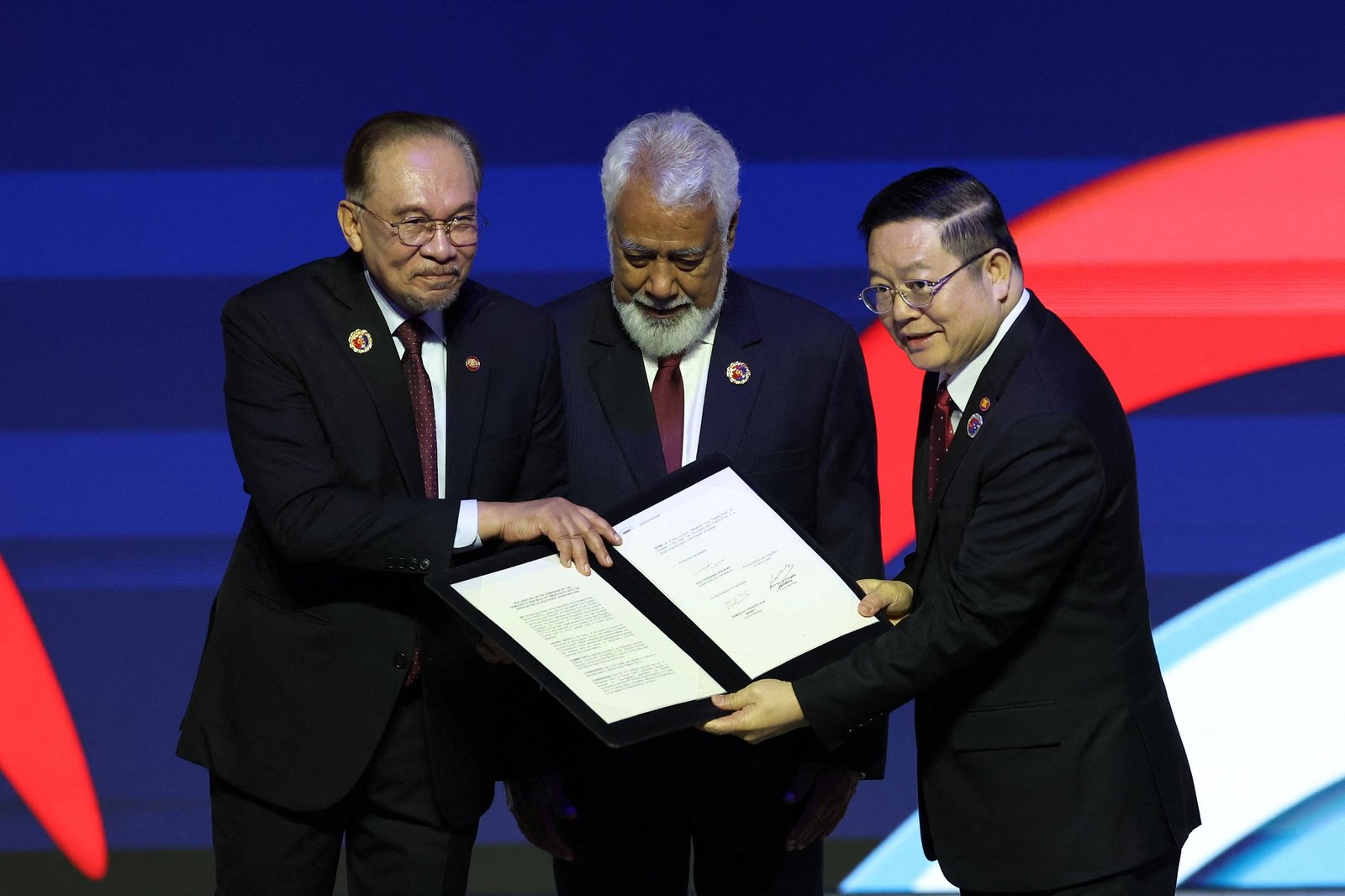
ASEAN 2025 — Timor-Leste Joins ASEAN After Being On The Sidelines

Gen Just Law
Jessica is the founder of Gen Just Law and the voice behind JESSISPRUDENS™ and THE JESS DOCKET™. She covers major criminal trials and breaking legal developments with a focus on the evidence, the law and the questions that remain after the headlines move on.
𝕏 Follow on X: @genjustlaw
Leave a Reply