Live Updates RECESS: the jury is on lunch break 3 weeks ago
Gen Just Law 𝕏 Follow me on X@genjustlaw

Category: South Korea

South Korea latest updates

South Korea

Korean Game Developers Spotlight at SGF 2025

At Summer Game Fest 2025, South Korea showed up with blockbuster game reveals and a global pop icon. From Pearl Abyss’s Crimson Desert to BLACKPINK’s Jennie soundtracking the event, the country’s creative industries are no longer side acts — they’re center stage.

2025-06-05◯ 0
South Korea

The Generation That Toppled a President: How South Korea’s Young Women Are Redefining Democracy

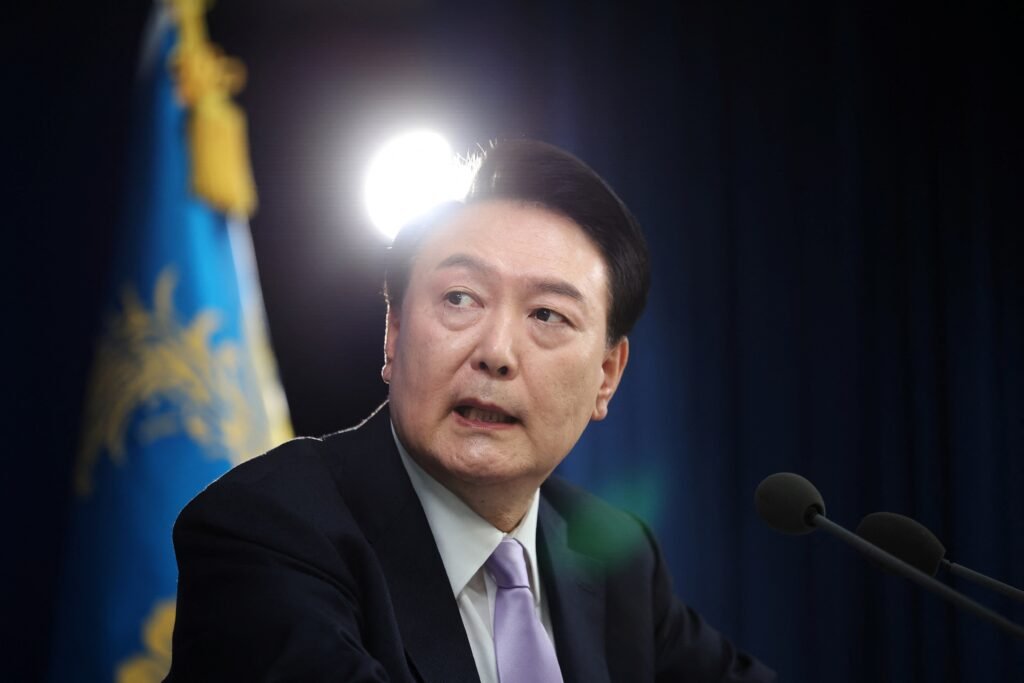
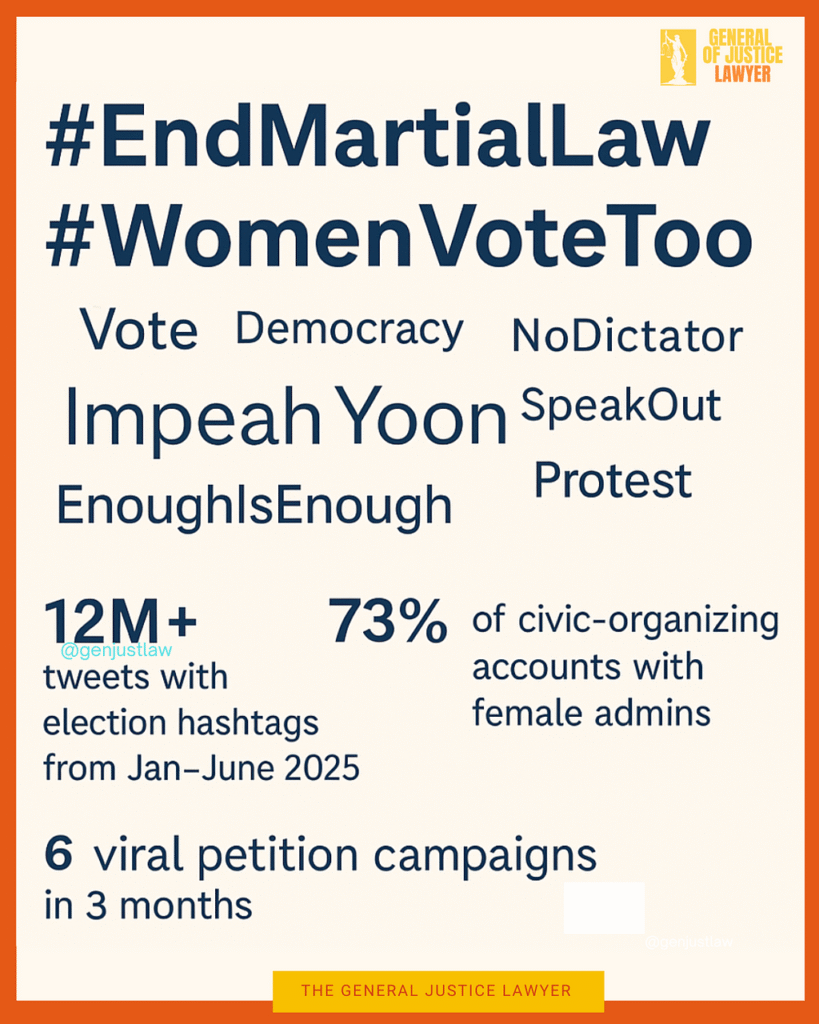
The Generation That Toppled a President: How South Korea’s Young Women Are Redefining DemocracyBy The General Justice Lawyer, June 5President Lee Jae-Myung’s Presidential Campaign 2025On June 3, 2025, South Korea made global headlines not only for electing a new president, but for the way it happened. Behind the historic victory of liberal candidate Lee Jae-myung was a political force too large to ignore: women in their twenties and thirties.In the span of six months, this demographic helped impeach a sitting president, reject military authoritarianism, and shift the tone of a national election. Their influence is no longer theoretical. It is reshaping the democratic process in real time.From Outrage to OverthrowThe catalyst was President Yoon Suk Yeol’s unprecedented decision to declare martial law in December 2024. Framed as a security measure to maintain order amid political unrest, the move was widely viewed as a democratic backslide. Civil liberties were curtailed, protests silenced, and media censorship intensified.Hashtag & Digital ActivismWhile public outrage simmered across age groups, it was women under 40 who organized, posted, donated, and voted with tactical intensity. They became the visible face of resistance, whether in silent candlelight vigils or in digital campaigns using hashtags like #EndMartialLaw and #WomenVoteToo.Their energy was not simply about gender. It was about defending the foundational promise of post-authoritarian South Korea: civilian rule.The Gender Gap WideningSouth Korea’s Gen Z voters are deeply politically engaged, but starkly divided along gender lines. Young men, many of whom feel alienated by mandatory military service and affirmative action policies, have drifted toward conservative populism. In contrast, young women — tired of misogyny in the workplace, online harassment, and being told to “be quiet” — are leaning liberal in growing numbers.Voter Turnout by Age and Gender (2025 Election)This split became sharply visible during the impeachment hearings in March 2025 and carried through to the June election. Analysts noted an unusually high voter turnout among women in their 20s and 30s, especially in urban areas. Exit polls confirmed it. They overwhelmingly supported Lee Jae-myung, not necessarily out of ideological alignment, but as a rejection of the previous administration’s disregard for democratic norms.Social Change With Political TeethWhat makes this movement different from earlier waves of youth activism in Korea is its staying power. These women are not just mobilizing for a single event. They are building political infrastructure. New civic groups, legal watchdog collectives, and voter education platforms have emerged in Seoul, Busan, and Daejeon, many of them woman-led and digitally native.And their influence is being felt beyond politics. Streaming platforms have seen a rise in feminist and socially conscious programming. Bookstores report increased sales of titles dealing with democracy, legal rights, and modern feminism. Even advertising campaigns have begun adjusting their tone to reflect this demographic's values.A Warning to PoliticiansThe message is clear. Ignore young women at your political peril. Their ability to drive public discourse, dismantle power structures, and hold leaders accountable is no longer a future trend. It is a present reality.For a country still navigating the shadows of authoritarianism and rapid economic development, this new wave of civic engagement offers both disruption and hope. The question now is whether South Korea’s political establishment is ready to listen.Follow @genjustlaw for more frontline insights on global justice, elections, and legal battles shaping the future of democracy.

2025-06-05◯ 0
South Korea

So Where’s Kim Soo-hyun Now

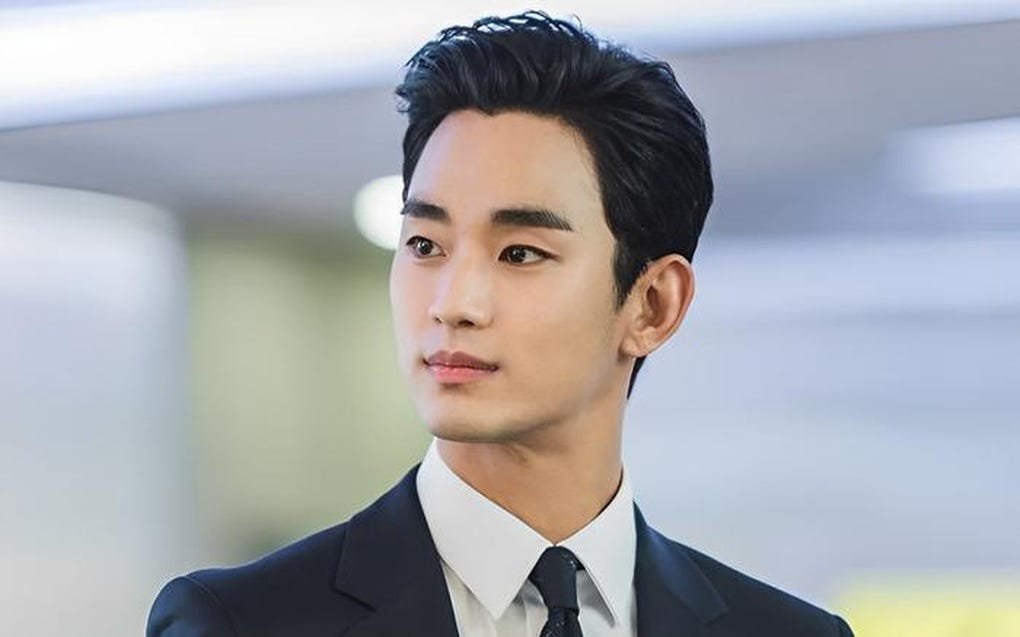
So Where’s Kim Soo-hyun NowBy The General Justice Lawyer, June 4Kim Soo-hyun [ êč€ìˆ˜í˜„ ]It’s the question echoing across group chats, fan cafĂ©s, and X timelines: Where is Kim Soo-hyun now?The king of K-drama ratings has vanished from the public eye after a whirlwind of controversy a strange mix of parasocial heartbreak, press conference tears, and allegations that spiraled from petty to potentially criminal.But now that the trending hashtags have cooled and the media frenzy has dulled, we’re left with a bigger question: what’s next for South Korea’s once-untouchable star?The Collapse Was TelevisedLet’s rewind. On May 20, Kim Soo-hyun visibly shaken appeared before cameras and delivered a 5-minute emotional statement.He wept. Apologized. Claimed betrayal.“I trusted someone I shouldn’t have,” he said, voice cracking.The moment was a masterclass in vulnerability. But beneath the sorrow, there was silence — a silence about the legal implications that quickly followed.What Actually HappenedKim Soo-hyun [êč€ìˆ˜í˜„]Rumors had swirled for weeks that Soo-hyun had been digitally manipulated into romantic scandal with fake AI-generated images, forged DMs, and even hacked schedules fueling a campaign of misinformation. Online investigators (and K-netizens with too much time) alleged that an actress in his circle had “set him up” for career ruin.But contrary to the impression of passivity, Kim Soo-hyun did take action. In March 2025, he filed a ₩12 billion civil lawsuit against Kim Sae-ron’s family and the controversial YouTube channel HoverLab, accusing them of defamation, privacy violations, and the use of AI-generated fake content. He also lodged criminal complaints for stalking and defamation under Korea’s strict information protection laws. Investigations reportedly revealed doctored photos and fake audio clips downloaded or fabricated online.So no , he didn’t just cry on camera and disappear. He lawyered up.The Law Doesn’t Protect FeelingsHere’s the legal reality: South Korea’s defamation laws are strict, even true statements can be punished if they damage a person’s reputation. But prosecuting someone for “emotional betrayal” or “reputation sabotage” gets murky fast, especially when the evidence sits in a grey zone between gossip and AI-generated fakery.As of June 2025, no public filings have been made by Kim’s opponents. No countersuits. Just a well-known actor going on legal offense while stepping away from public life as the media industrial complex waits for a comeback.So Where Is He Now?Sources close to Kim say he’s in Jeju, “recharging.” His fan club insists he’s reading scripts. Some tabloids claim he’s considering further legal action behind the scenes, especially toward platforms that amplified fake content.What we do know is that he’s quiet. His agency has frozen most activity. His endorsement deals are paused. And fans are left decoding every possible signal, from his mother’s social media posts to the playlists on his fan cafĂ©.The Bigger Question: Can He Come Back?In Korea, a scandal doesn’t always end a career, but it does reset the rules. Public forgiveness depends on narrative, not facts. And right now, Kim Soo-hyun’s story is half-written. Is he a victim of a calculated takedown in the age of AI?Or a megastar whose silence speaks louder than any press release?One thing’s certain: in an industry built on perception, disappearing can be the most strategic move of all.Follow @genjustlaw for more sharp legal commentary and behind-the-scenes coverage of celebrity trials, digital law, and South Korea’s evolving justice system.

2025-06-04◯ 0
South Korea

Lee Jae-Myung Elected President Of South Korea: What’s Next?

Lee Jae-Myung Elected President Of South Korea: What’s Next?By The General Justice Lawyer, June 4On June 3, 2025, Lee Jae-myung of the Democratic Party was elected President of South Korea, defeating conservative rival Kim Moon-soo in a tightly contested race. With over 48% of the vote, Lee’s victory marks a political comeback just years after facing legal scrutiny and public controversy. Now, as South Korea’s new head of state, he confronts deep domestic division, a volatile economy, and renewed geopolitical pressure.A Divided Electorate, a Decisive MandateAccording to the National Election Commission, Lee secured 48.35% of the vote, narrowly ahead of Kim Moon-soo’s 42.82%. Voter turnout reached 74.1%, a sign of intense public interest in a race shaped by corruption trials, inflation fears, and North Korea’s military provocations.Despite legal battles that once threatened to derail his political career, Lee managed to mobilize youth voters, progressive districts, and the remnants of the 2022 protest movement to secure a narrow but legitimate mandate.Key Policy PromisesLee’s campaign was built on rebuilding public trust in government and addressing income inequality. His central promises include:A “Universal Basic Income” pilot for young adults and the elderly.Stronger labor protections,including the reversal of certain pro-chaebol labor deregulations.Aggressive housing reformsparticularly in Seoul and Incheon, to tackle skyrocketing rent.Reengagement with North Korea,including reopening the Kaesong Industrial Complex if conditions allow.Foreign Policy and National SecurityLee is expected to pivot toward a “balanced diplomacy” stance, softening the previous administration’s firm alignment with the U.S. and Japan while re-opening diplomatic channels with China. However, his stance on North Korea will be watched closely, especially following recent missile tests and border incidents.He has promised to maintain defense readiness while also exploring peace initiatives, a dual strategy that has historically drawn criticism from hardliners.Immediate Challenges AheadLee enters office amid:Soaring youth unemploymentA cost-of-living crisisDeclining birth rates and an aging populationPersistent distrust in the judiciary, especially after recent scandals involving senior judgesHe must also manage a divided National Assembly, where conservative lawmakers remain strong and may attempt to block key reforms.Political Comeback After Legal FirestormJust two years ago, Lee was battling multiple investigations linked to the Daejang-dong land development scandal and alleged misuse of campaign funds. Although never convicted, the shadow of indictment haunted his presidential bid. His election signals a public willing to forgive or at least, desperate for change.His return also marks the first time in South Korea’s democratic history that a former gubernatorial candidate under indictment has risen to the presidency.What to Watch ForWill Lee appoint technocrats or loyalists in his cabinet?Can he deliver on social welfare expansion without alienating the business sector?How will conservative media and prosecutors treat his presidency?His early months in office will set the tone for a country still grappling with its democratic identity, economic future, and generational divides.---📱 Follow @genjustlaw for real-time legal and political coverage from Seoul to Washington.

2025-06-04◯ 0
South Korea

From the Factory to the Blue House: Lee Jae-Myung Elected President of South Korea

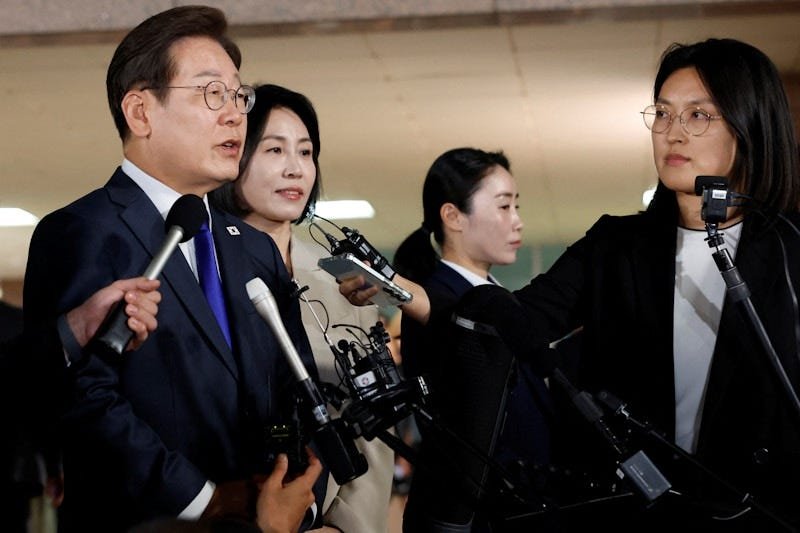
From the Factory to the Blue House: Lee Jae-Myung Elected President of South KoreaBy The General JusticeLee jae-myung in Incheon, June 3. ReutersSEOUL, June 3, 2025 – Lee Jae-myung, the Democratic Party candidate and former factory worker who rose through South Korea’s political ranks, has been elected the nation’s 14th president, according to projections by local broadcaster SBS. The National Election Commission (NEC) reported that 23.83% of votes had been tallied by 11:26 PM KST, with Lee securing 47.81% of the ballots compared to his conservative rival Kim Moon-soo of the People Power Party (PPP), who garnered 43.99%.This victory marks a dramatic turnaround for Lee, who narrowly lost the 2022 presidential race and faced legal battles, yet now steps into the Blue House following a tumultuous snap election triggered by the impeachment of former President Yoon Suk-yeol.Exit polls earlier in the evening had already signaled Lee’s win, with a joint survey by KBS, MBC, and SBS projecting him at 51.7% against Kim’s 39.3%, a result echoed by JTBC (50.6% for Lee) and Channel A (51.1%). These polls, historically accurate, showed Lee dominating in key regions like Gyeonggi (55.8%), Seoul (49.3%), and Gwangju (81.7%), while Kim held a lead in Busan (49%) and parts of central and south-eastern Korea. The NEC expects 70-80% of votes to be counted by midnight KST, with final tallies continuing into Wednesday morning, potentially confirming Lee’s lead.THE PATH TO PRESIDENCYLee Jae-myung Incheon, June 3. ReutersÂ ìŽìžŹëȘ…Lee’s path to the presidency was paved by public outrage over Yoon’s martial law decree in December 2024, which led to his impeachment and removal in April 2025.The snap election, South Korea’s second following a presidential impeachment, saw a record-breaking 79.4% voter turnout—the highest in 28 years, per Yonhap News Agency. Supporters celebrated outside Lee’s Incheon home, urging him to address them as he followed results from his cordoned-off residence.Meanwhile, the Democratic Party hailed the outcome as a “thunderous judgment against the insurrectionist regime,” reflecting public desire to recover from political and economic turmoil.The election faced scrutiny over ballot transportation, with concerns about potential irregularities in delivery routes and non-compliance with sealed box protocols, despite 29,000 police officers assisting and 24-hour CCTV monitoring in place. Earlier incidents in Gwangju, where voters tore ballots after replacement denials, also prompted an NEC investigation, highlighting tensions in the process.Lee, once a factory worker who later became a human rights lawyer and governor of Gyeonggi, campaigned on pledges to position South Korea as a global AI leader, implement citizen-driven policies, revitalize rural areas, and enhance animal welfare. His proposal to relocate the presidential office and legislature to Sejong as a new administrative capital stirred debate, with some seeing it as a bold move to decentralize power, though past attempts led to fluctuating property prices in the city.The PPP’s Na Kyung-won called the projected loss “very disappointing” and “somewhat shocking,” expecting a closer race but citing “confusion within the party” and the late spread of “negative news” about Lee as setbacks. New Reform Party candidate Lee Jun-seok, projected third with 7.7% in exit polls, conceded defeat, expressing hope that Lee Jae-myung would make “careful and accurate decisions on national unity and the economy.”Lee’s victory, while a mandate for change, comes amid a polarized nation. Women, who supported Lee at 55% per exit polls, felt sidelined as gender equality took a backseat in the campaign—the first in 18 years without a female candidate. Economic challenges loom, with South Korea’s central bank slashing its 2025 growth forecast to 0.8% due to U.S. trade tariffs and domestic instability. Lee’s legal troubles, including charges he claims are politically motivated, may also complicate his presidency, with debates over whether his trials should pause during his term.Lee Jae-myung has been elected as South Korea’s president in the 2025 snap election. The National Election Commission (NEC) data showed that with 85.1% of votes counted by nearly 2:00 AM KST on June 4, 2025 (1:00 PM EDT on June 3), Lee secured 48.35% of the votes, while his rival Kim Moon-soo had 42.82%. Kim conceded defeat at a press conference at 1:30 AM KST, and national broadcaster KBS confirmed Lee’s win shortly after. Lee’s victory was celebrated by supporters, and he has already spoken to the media and supporters, expressing gratitude and pledging to fulfill his duties.As the new President, Lee’s journey from the factory floor to the Blue House ushers in a new era for South Korea—one that will test his ability to unify a divided nation and deliver on promises in a time of global and domestic uncertainty.Follow @genjï»żustlaw

2025-06-03◯ 0
South Korea

South Korea’s Cho Doo-soon Case: An 8-year-old Sexually Assaulted

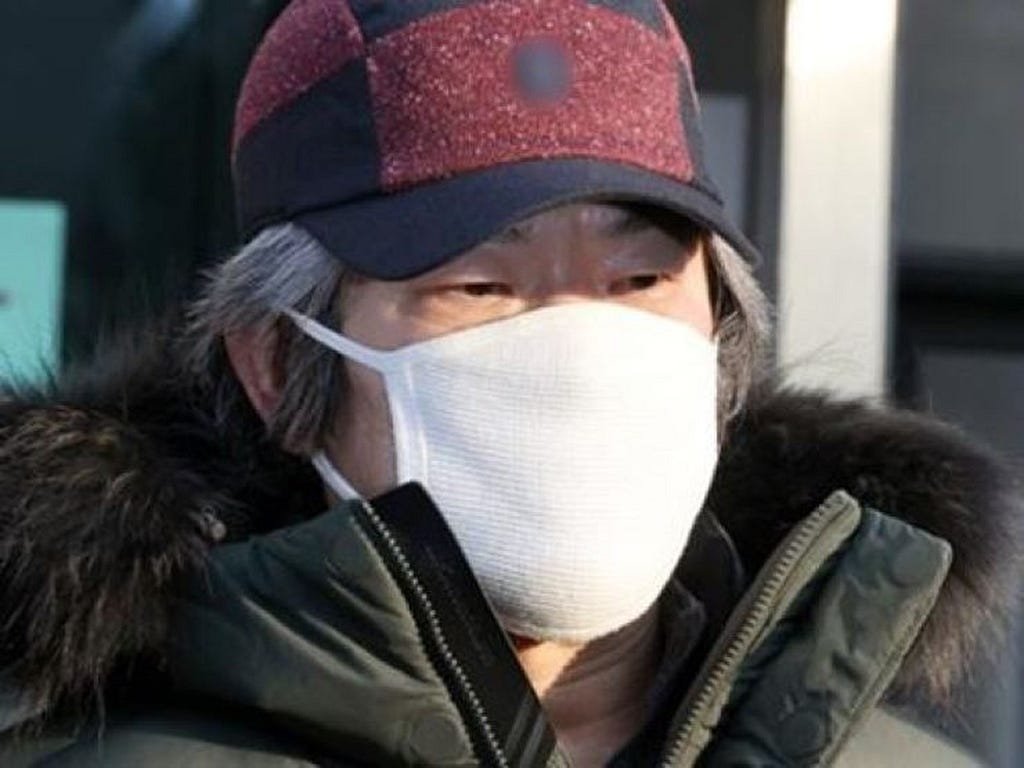
South Korea’s Cho Doo-soon Case: An 8-year-old Sexually AssaultedBy The General Justice Lawyer, June 1The year is 2008. Ansan’s Cho Doo-soon sexually assaulted an 8-year-old girl, receiving a 12-year sentence that sparked nationwide outrage in South Korea.The “violence and intimidation” rape law’s narrow scope, which required proof of coercion, fueled protests demanding consent-based reforms. The case’s shock drove legislative change, but the fight for broader protections persists.On a December morning in 2008, Cho Doo-soon abducted an 8-year-old girl, known as “Na-young” in media to protect her identity, from a church bathroom in Ansan, Gyeonggi Province.He brutally raped her, leaving her with permanent physical and psychological injuries. The trial revealed chilling details: Cho’s intoxication was cited as a mitigating factor, and the court sentenced him to just 12 years, far below the life imprisonment many expected.South Koreans, stunned by the perceived leniency, flooded the streets, their protests amplifying a national reckoning over sexual violence laws.South Korean protestingSouth Korea’s rape law at the time defined rape as requiring “violence and intimidation,” meaning prosecutors had to prove physical force or threats, not merely lack of consent.In Cho’s case, the law’s narrow scope allowed his intoxication defense to reduce the sentence, as it was argued he lacked full intent.Legal scholars criticized this standard for failing to address consent or protect vulnerable victims, like children.The Cho Doo-soon case, alongside later cases like Ahn Hee-jung’s 2018 trial, exposed how the law often favored perpetrators over survivors, igniting calls for a consent-based framework.The Nation’s Response was loud. The public’s fury led to immediate action. Protests in Ansan and Seoul drew thousands, with parents and activists demanding harsher penalties and better victim protections.Social media helped amplified the outcry, with hashtags like #NaYoungCase trending.A mother from Ansan, who joined the protests, shared her fear:“I couldn’t let my daughter walk to school alone after that. We needed change.”Her story echoed countless others, uniting communities in grief and resolve.The 2010 “Cho Doo-soon Law”In response, South Korea passed the 2010 “Cho Doo-soon Law,” mandating electronic anklets for convicted sex offenders post-release to track their movements. This was a direct outcome of the case, aimed at preventing recidivism.However, critics argued it didn’t address the root issue: the legal definition of rape. While the law marked progress, it fell short of the consent-based reforms activists sought, leaving gaps in survivor protections.The Cho Doo-soon case fueled a broader movement for rape law reform, influencing later #MeToo protests in South Korea, particularly after the 2018 Ahn Hee-jung case.In 2022, the Ministry of Gender Equality and Family proposed redefining rape as non-consensual sex, but the plan was canceled in 2023 amid political shifts. The case’s legacy endures, with activists citing Na-young’s story to push for systemic change, though progress remains stalled.The General Justice LawyerIndependent ReporterFollow @genjustlaw on Xwww.genjustlaw.com

2025-06-01◯ 0
South Korea

How the Ahn Hee-jung Case Sparked South Korea’s #MeToo Movement

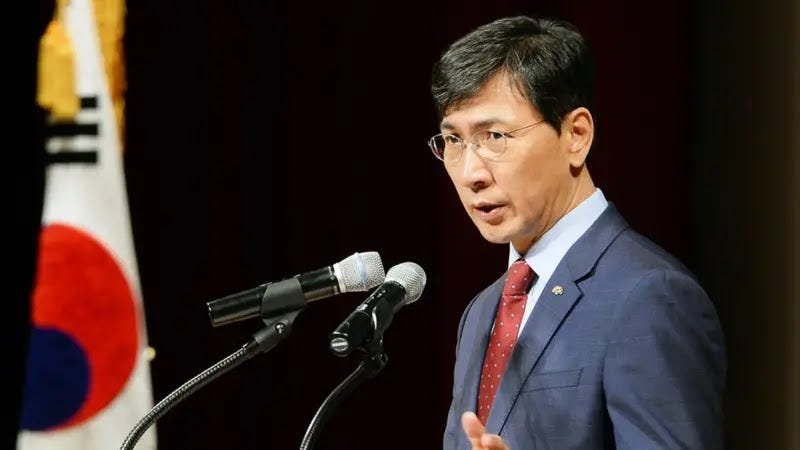
How the Ahn Hee-jung Case Sparked South Korea’s #MeToo MovementBy The General Justice Lawyer, June 1Ahn Hee-JungIn 2018, Seoul’s Ahn Hee-jung, a prominent politician, was acquitted of raping his secretary, Kim Ji-eun, under the “violence and intimidation” rape law, igniting nationwide #MeToo protests that demanded a consent-based legal framework to protect survivors.Ahn Hee-jung, then-governor of South Chungcheong Province, was accused by Kim Ji-eun of multiple non-consensual sexual encounters. The August 2018 Seoul Western District Court acquittal cited insufficient evidence of coercion, a requirement under South Korea’s rape law at the time. Public outrage erupted, as the ruling highlighted the law’s failure to address power dynamics or explicit consent.“I am sorry and I am so ashamed,” he said. I have disappointed many. I will make efforts to be born again.Kim’s televised allegations in March 2018 sparked South Korea’s #MeToo movement, with thousands sharing stories of sexual violence on online platforms using hashtags like #믾투. Protests in Seoul demanded legal reform, drawing parallels to global #MeToo waves.“I will fight 
 until the day when those using their power to sexually abuse others are held accountable under the laws,” she said.Kim Ji-Eun | Photo : GoogleThe 2019 Seoul High Court overturned the acquittal, sentencing Ahn to three and a half years, upheld by the Supreme Court in 2020.This victory fueled advocacy for a consent-based rape law, though a 2022 proposal stalled in 2023.The Ahn Hee-jung case marked a turning point for South Korea’s #MeToo movement, exposing gaps in the country’s rape laws.While the push for a consent-based framework stalled in 2023, its influence persists, driving ongoing conversations about gender justice and survivor protections.Follow @genjustlaw

2025-06-01◯ 0