By The General Justice Lawyer, June 29 2925
Seoul, South Korea — South Korea’s intellectual property (IP) landscape is undergoing a sharp transformation. While copyright, trademark, and patent protections have long formed the backbone of Korean IP law, recent legal developments have widened the scope to include persona rights, AI-generated content, and digital identity enforcement.
The AI Basic Act (AI기본법) — Effective in 2026
Passed in 2024 and entering into force in 2026, the AI Basic Act is a game-changer. It provides full legal protections over face, voice, and likeness, treating them as part of a person’s protected IP profile.
Under this law, unauthorized generation or manipulation of an individual’s image using AI including deepfakes, AI voice cloning, and synthetic fan videos is considered a violation of:
- Publicity rights (civil law)
- Copyright law (if original content is used or altered)
- Criminal statutes (e.g. for defamation or fraud)
Artists, influencers, and entertainers are especially protected. Agencies can now pursue damages without needing the victim to prove direct authorship or creative origin their identity alone is the protected asset.
Plave Avatar Case — Defamation for Virtual Celebrities
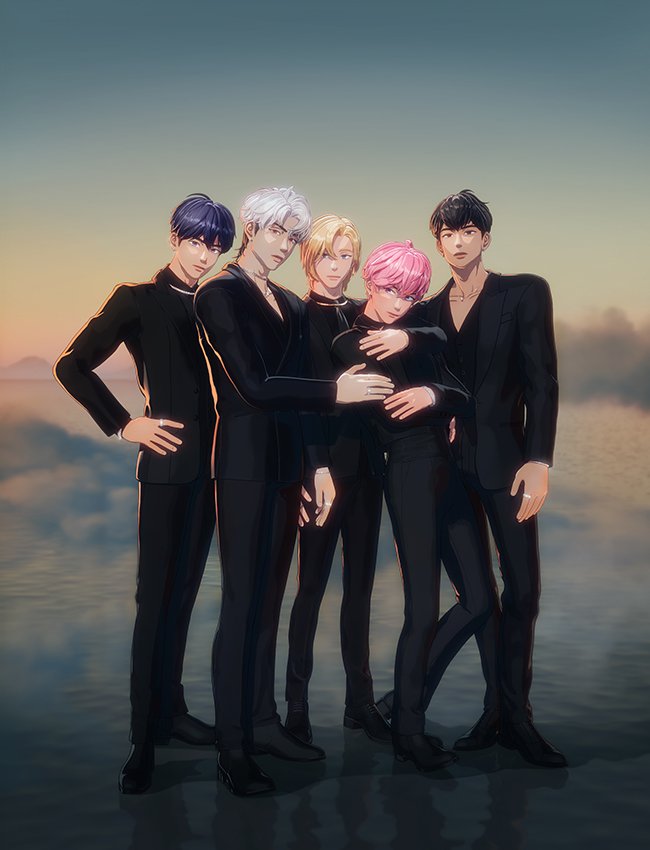
In early 2025, a Korean court ruled in favor of Plave, a virtual K-pop group, in a defamation suit. Despite being non-human avatars, the court recognized the characters as “legal subjects” entitled to protection.
Legal takeaway: Even digitally created identities managed by agencies can be protected under Korean IP and defamation law, so long as their brand image holds market value.
This precedent has major implications for:
- AI idols and virtual influencers
- Character rights in gaming and digital marketing
- The legal status of non-human personas in agency contracts
HYBE & Legal Control of Artist Branding
Recent controversies around HYBE Labels including internal disputes, artist-management breakdowns, and public outcry over how artist images are used illustrate how IP law intersects with contractual and branding obligations.
While most conflicts have not reached the courtroom, Korean IP law applies in the background:
Artist likeness, name, and performance identity are IP assets typically owned or controlled by the agency.
Disputes over image usage, sponsorship visibility, and content access may fall under contract law, unfair competition, and publicity rights.
If an artist’s image is used without consent after termination of contract, agencies risk civil liability under the Commercial Act and IP statutes.
These tensions will likely become more litigious as IP protections over image and identity tighten under the AI Basic Act and revised Unfair Competition Prevention Act (2024).
South Korea’s evolving IP regime is increasingly centered around the legal ownership of identity. With the AI Basic Act, court recognition of virtual celebrities, and heightened scrutiny over agency-artist dynamics, IP law now extends far beyond creative works. It governs who owns a face, a voice, and an audience.
In this new environment, agencies, entertainers, and platforms must navigate legal boundaries with precision. What was once publicity is now property and what was once branding is now protected intellectual capital.
Leave a Reply