
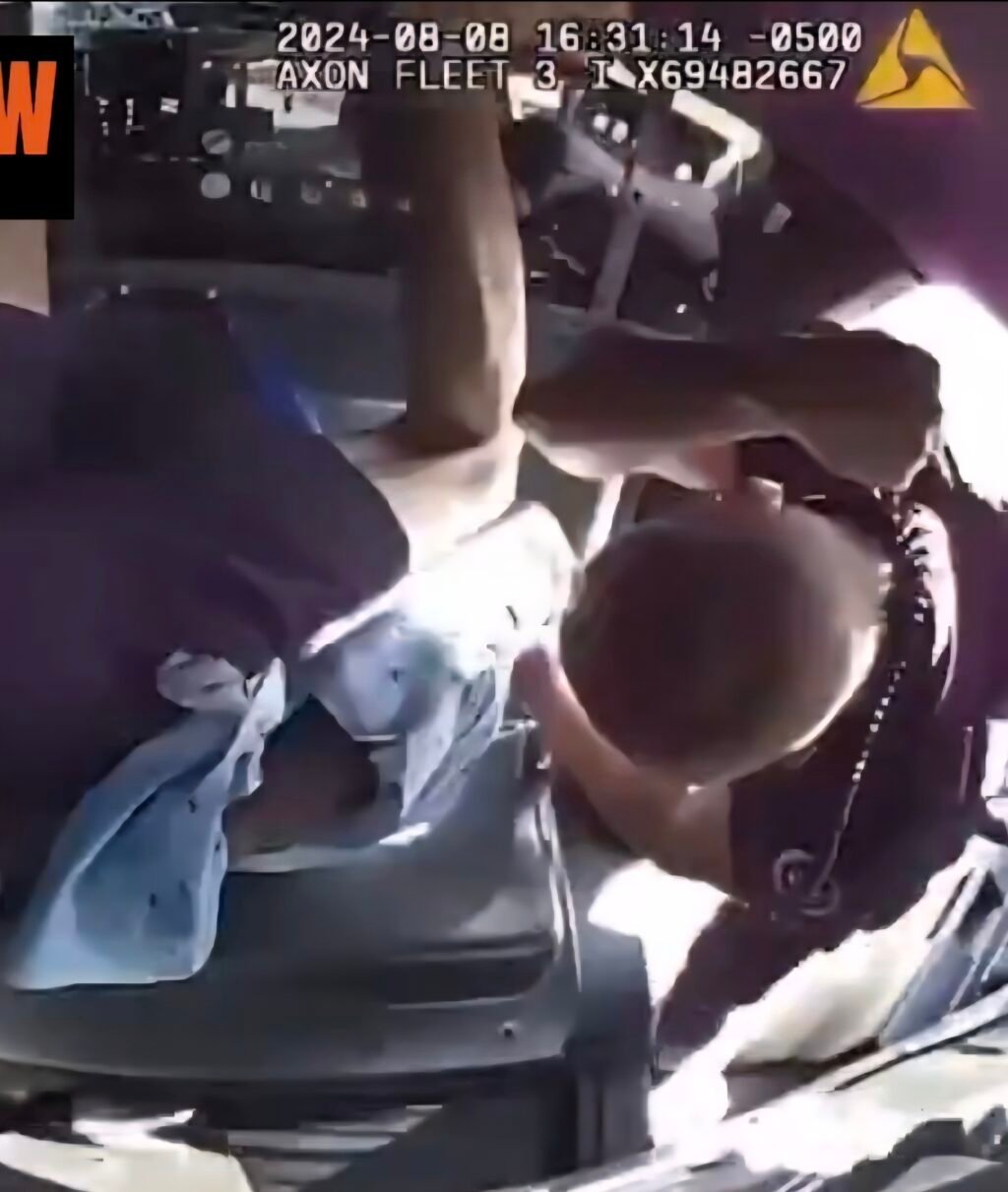
The trial of Joseph Tucker Harris has become a focal point for questions about police accountability, constitutional rights, and how video evidence transforms use‐of‐force cases. Harris, a former officer with the Jonesboro Police Department, is accused of violently assaulting a handcuffed inmate, Billy Lee Coram, inside the back of his patrol car during transport to the Craighead County Detention Center. The conduct was captured on the car’s interior camera, and that footage now anchors both the prosecution’s case and defense strategy.
After the footage surfaced, Harris was fired the next day by Chief Rick Elliott, and his law enforcement certification was referred for possible decertification under Arkansas’s CLEST (Commission on Law Enforcement Standards and Training) rules. The charges against him include aggravated assault (a Class D felony), filing a false report, and third-degree battery (a misdemeanor). As of mid-2025, motions and plea hearings had been postponed; the jury trial is now scheduled for November 17–21, 2025, with motions and plea hearings on October 29 and November 6.
Legally, the case hinges on Fourth Amendment doctrine about unreasonable seizure and the permissible use of force by police against detainees. Courts will be asked to assess whether Harris’s actions were objectively reasonable under Graham v. Connor, which requires considering the facts from the perspective of a reasonable officer on the scene. The video evidence is powerful: it shows Harris allegedly punching, elbowing, and slamming the car door onto Coram’s head—all while Coram was restrained and unable to resist.
Coram’s lawyers have also filed a federal civil suit against Harris, the City of Jonesboro, and Chief Elliott, invoking 42 U.S.C. § 1983 for violations of Coram’s constitutional rights—namely excessive force, failure to intervene, and municipal liability for inadequate training or oversight. The dual track of state criminal charges and federal civil claims means that evidence introduced in one arena could influence the other. The defendants will likely argue suppression of portions of the video or limiting the scope of admissible testimony, especially regarding Coram’s condition or statements during the transport.
Delay has been a recurring feature. In July 2025, the court postponed earlier scheduled trial dates, citing administrative reasons and setting new windows for motions, pleas, and the November trial. The judge’s order specifically excluded those delays when calculating the speedy trial clock, preserving the prosecution’s window.
One of the more contested issues will be whether the video in context supports an inference of malicious intent or instead shows split-second decisions under pressure. The defense may argue Coram’s erratic behavior—he wrapped a seatbelt around his neck during transport—required force to regain control, though prosecutors will counter that the force used went far beyond a need to restrain.
Another legal angle is chain-of-command liability. Coram’s complaint claims that Chief Elliott was aware of prior use-of-force concerns with Harris and failed to act. If the court deems that oversight deficient, Jonesboro’s municipal liability could come into play under Monell v. Department of Social Services principles.
This trial may help recalibrate how strongly video evidence weighs in use-of-force prosecutions. If the jury convicts, it could embolden further prosecutions of officers in similar cases. If acquitted, it may reaffirm how fact-specific these claims remain. Either way, the Harris trial will be watched not just in Arkansas, but by reform advocates, legal scholars, and policing critics nationwide.
Author

Latest entries
 Lex Feminae Index2026-01-29Kenya 🇰🇪 | A Legal System That Acknowledges Violence But Fails to Stop It
 Lex Feminae Index2026-01-27Climate-Driven Displacement: The Jurisdictional Black Hole For GBV Survivors
 Lex Feminae Index2026-01-16Why Access To Justice Determines GBV Outcomes in Climate Crises
 Lex Feminae Index2025-12-1016 Days |Online Abuse Is Gender-Based Violence. The Law Must Catch Up