

APEC 2025 in Gyeongju delivered billion-dollar pledges and diplomatic photo ops but left trade law, AI regulation, and enforcement off the table.
The summit in Gyeongju felt less like trade talks and more like a geographic tug-of-war. The theme was “Building a Sustainable Tomorrow: Connect, Innovate, Prosper” and fair enough, it sounds hopeful. But as the delegates filed in, the ecosystem of alliances, investments and legal loopholes were the real agenda.
First: the investment kingdom. Amazon Web Services committed at least $5 billion to build data-centres in South Korea by 2031. Seven global firms pledged a combined $9 billion over five years. One purpose? Fuel Seoul’s ambition to be a top-3 global AI player. So yes, the summit had business. Massive business.
But then there’s the trade reality check. The declaration avoided the term “free and open trade” outright, a sign that the bloc’s original mission is fraying under the pressure of U.S.–China rivalry. Canada’s PM Mark Carney declared the era of rules-based trade is over.
Jessisprudens-wise, when foundational trade language disappears, what replaces it becomes a patchwork of state interests and side deals. The common norm becomes weaker. When that happens, restoring accountability becomes harder.
Then there’s the tech-demographic gambit. South Korean President Lee Jae‑Myung fronted the “APEC AI Initiative,” pointing to the link between aging populations, shrinking workforces and algorithmic acceleration. Legal-policy implication: tech regulation and demographic law are merging. Intellectual property, AI liability, data sovereignty, they’re no longer specialist issues but central governance questions.
Geopolitics hovered. U.S. President Donald Trump attended the CEO summit but skipped key leader sessions. Meanwhile Xi Jinping found a stage in Gyeongju to show China still holds cards in the Asia-Pacific. So while the room talked “connect, innovate, prosper,” the cameras captured alliances being marked.
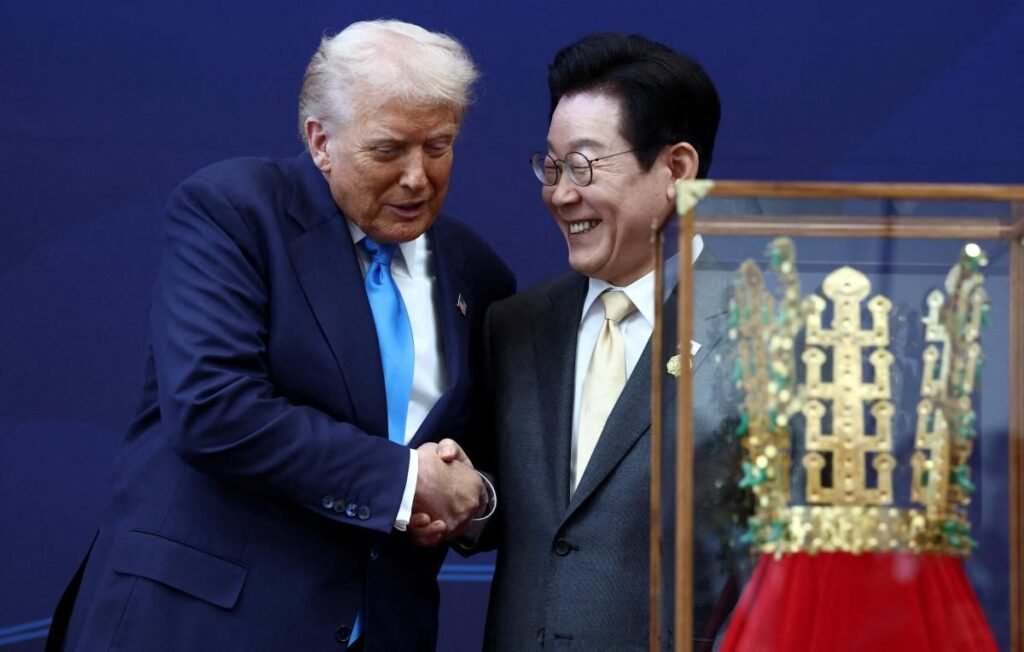
Here’s where things get sharper: The APEC summit still lacks enforcement mechanisms. Declarations, roadmaps, Pledges, they’re there. But international law regarding cross-border investment, AI regulation, demographic obligations, already thin, was mounted in a binder and left on the table. When leaders sign on to promote cooperation yet preserve sovereignty over their own data, tech, trade and defense, what’s binding becomes negotiable.
If you were in Gyeongju you heard: “economic growth that benefits all,” “region of resilience and prosperity,” “Connect, Innovate, Prosper.” But you also saw what wasn’t said: no binding AI treaty, no clear enforcement arm of the trade system, no legal architecture for demographic rights when tech replaces jobs. The law exists. The will is still renting its chair.
As your Iuris Oculus, APEC 2025 succeeded in optics and pledges. It failed in regulation and force. Investing billions is real. Regulating billions is optional. For the Asia-Pacific, where half the world’s trade and 61 % of GDP live under one forum, “optional” doesn’t cut it.

Author

Latest entries
 Lex Feminae Index2026-01-29Kenya 🇰🇪 | A Legal System That Acknowledges Violence But Fails to Stop It
 Lex Feminae Index2026-01-27Climate-Driven Displacement: The Jurisdictional Black Hole For GBV Survivors
 Lex Feminae Index2026-01-16Why Access To Justice Determines GBV Outcomes in Climate Crises
 Lex Feminae Index2025-12-1016 Days |Online Abuse Is Gender-Based Violence. The Law Must Catch Up