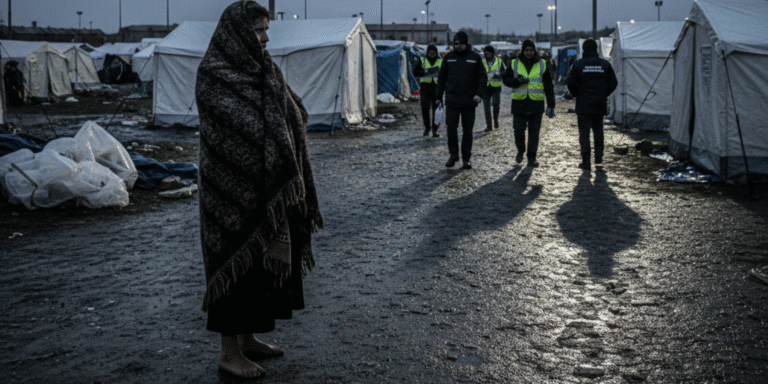

A Jerusalem court’s decision to postpone a head-of-state corruption hearing for “diplomatic meetings” shows how easily accountability bends to politics. Court calendars shift, but the fallout of conflict never does. In every modern war: Ukraine, Gaza, Sudan, Ethiopia, sexual violence trails behind artillery fire. The timing changes; the pattern doesn’t.
International humanitarian law treats rape in conflict as a war crime under the Geneva Conventions and the Rome Statute. But Iuris Oculus sees that, enforcement collapses whenever a sitting leader claims “security obligations.” The same rationale that delays testimony also delays recognition of victims.
When governments describe civilian harm as collateral, they erase women first. Displacement, detention, and sexual coercion follow blockades as predictably as hunger. Each emergency meeting on “regional stability” widens the gap between real people and abstract diplomacy.
The Responsibility to Protect doctrine was meant to stop that gap from becoming a grave. Instead, it’s been diluted into a slogan renewed whenever convenient. States sign treaties, fund conferences, and suspend outrage when the accused controls an army or a trade route.
The gendered cost of this moral elasticity is measurable. UN Women reports that in most conflicts, less than one per cent of sexual-violence cases ever reach prosecution. The figure isn’t a regional anomaly; it’s structural. Courts move only when politics allows, and politics moves only when images go viral.
Justice systems claim neutrality, but neutrality in war zones is rarely neutral, it favors the actor with missiles, not the survivor with evidence. Every postponed hearing signals to the world that diplomacy outweighs due process.
Accountability cannot coexist with exception. When legal institutions pause for power, they teach every future perpetrator that impunity is negotiable. The law’s universality collapses, and gender-based violence becomes an accepted cost of conflict management.
History keeps the receipts. Bosnia. Darfur. Tigray. The pattern repeats: political immunity first, international concern later, justice never. And while the headlines move on, survivors rebuild lives in silence, waiting for a court date that will never arrive.
Diplomacy may buy peace talks. But every time it buys delay, it sells out the principle that no one, not even the most powerful, stands above the law.

Author

Latest entries
 Lex Feminae Index2026-01-29Kenya 🇰🇪 | A Legal System That Acknowledges Violence But Fails to Stop It
 Lex Feminae Index2026-01-27Climate-Driven Displacement: The Jurisdictional Black Hole For GBV Survivors
 Lex Feminae Index2026-01-16Why Access To Justice Determines GBV Outcomes in Climate Crises
 Lex Feminae Index2025-12-1016 Days |Online Abuse Is Gender-Based Violence. The Law Must Catch Up