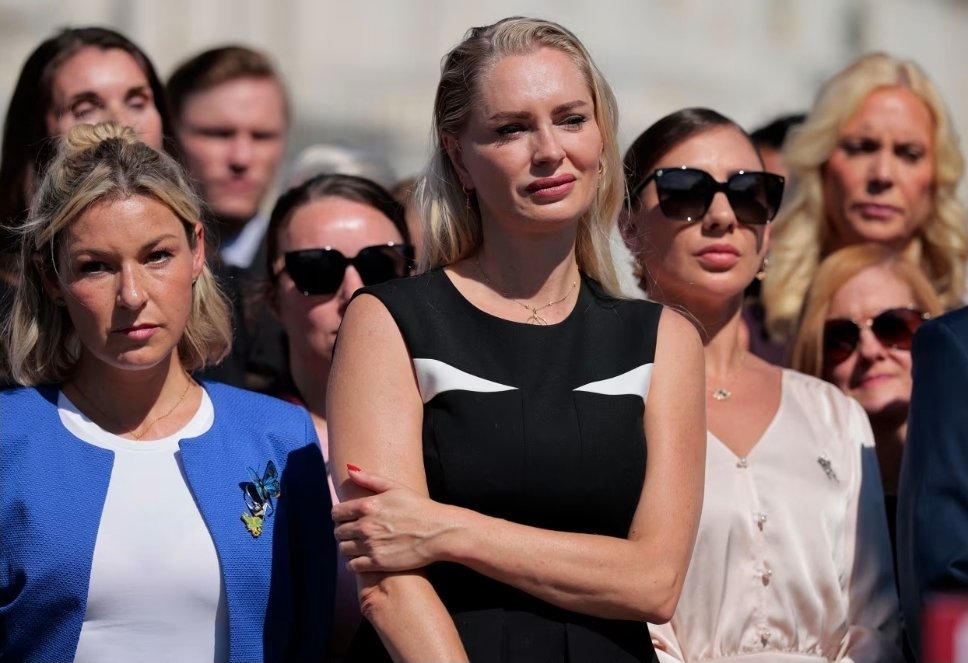
For the first time, a large group of Jeffrey Epstein’s survivors stood together on Capitol Hill, demanding that the government release the files it continues to hold on his crimes. The press conference lasted more than two hours, bringing forward women who for years were anonymous names in indictments and court filings. Now they spoke in public, putting pressure on Congress to act on the Epstein Files Transparency Act.
The event was striking not only for the testimony but for who was on stage. Democratic Rep. Ro Khanna stood alongside Republican Reps. Thomas Massie and Marjorie Taylor Greene, a lineup rarely seen in today’s Congress. Greene went so far as to say that if survivors gave her their list of abusers, she would “say every damn name” on the House floor.
That promise carried legal weight: under the Constitution’s Speech or Debate Clause, members of Congress cannot be sued for defamation for words spoken in official proceedings. Survivors, who fear retaliation if they name names publicly, know that lawmakers can give their truths protection that ordinary citizens cannot.
Marina Lacerda, previously known only as “minor victim one” in the 2019 indictment against Epstein, revealed her name and told the audience that the government knows more about her abuse than she does. She described how critical documents remain sealed, information that could help her understand her own trauma but has been kept from her.
In law, the government often invokes privacy or ongoing investigation exemptions to justify withholding records, yet here those justifications are weighed against the rights of survivors to access information about their own lives. Lacerda’s testimony made clear how cruel that imbalance can be.
Annie Farmer reminded the crowd that Ghislaine Maxwell was not merely an accomplice to Epstein but an active participant. Farmer has been public for years, testifying against Maxwell at trial, but her words on Capitol Hill carried a new urgency. She warned that systems designed to protect victims can easily replicate the abuse cycle when they mishandle cases. This is more than a moral failure; in legal terms, institutional negligence can deepen harm and erode trust in justice itself.
British actress Anouska de Georgiou described years of fear, threats, and even being followed in cars as she tried to raise her daughter. She called Maxwell’s new prison assignment a “holiday camp,” underscoring how the transfer of Epstein’s accomplice to a lower-security facility felt like another betrayal.
In the federal system, such transfers are routine, often justified by good behavior or classification rules. But for survivors, the law’s technical explanations do not erase the perception that accountability is being diluted.
Lisa Phillips introduced one of the most striking developments. She said that if the government refuses to release the files, survivors will compile their own confidential list of abusers. “We know the names,” she insisted, though she acknowledged that the list would not be public because survivors fear lawsuits and retaliation.
Attorney Brad Edwards explained the risk bluntly: victims could be sued for defamation if they accuse powerful figures without legal shield. This fear of civil liability is one reason why survivors are asking Congress to take responsibility for disclosure rather than leaving them exposed.
Others turned directly to Donald Trump. Haley Robson invited him to meet survivors at the Capitol, rejecting his claim that the Epstein files issue is a “hoax.” Chauntae Davies added that Epstein’s “biggest brag” was his friendship with Trump, recalling how Epstein flaunted a framed photo of him on his desk and spoke of travels with former President Bill Clinton.
Legally, none of these friendships prove complicity, but politically the associations add to the pressure. Multiple survivors appealed to Trump to back the transparency bill, knowing that his endorsement could strip congressional Republicans of cover to oppose it.
Sky Roberts, brother of Virginia Giuffre, who died by suicide earlier this year, made an emotional plea that cut through the politics. He told lawmakers to look survivors in the eye, then look their own families in the eye, before choosing whether to vote for or against transparency. “Money should never be what makes something right or wrong,” he said. His words captured the essence of the survivors’ argument: that secrecy protects power, while transparency protects people.
What played out in Washington was more than a press event. It was a collision between law, politics, and human testimony. Survivors spoke of fear, betrayal, and intimidation, but also of resilience and solidarity. Their accounts illustrated why congressional oversight exists: to prevent institutions from burying truths that the public has a right to know. The legal tools are already in place—from the discharge petition that can bypass leadership and force a vote, to the constitutional protections that allow lawmakers to speak names without fear of lawsuits. The question is whether Congress will use those tools.
The survivors made it clear that they will not be silent again. Their testimony did not just recount past abuse. It pressed lawmakers to decide whether the system will continue protecting predators and the powerful, or finally stand on the side of those who have already lost too much.

Leave a Reply