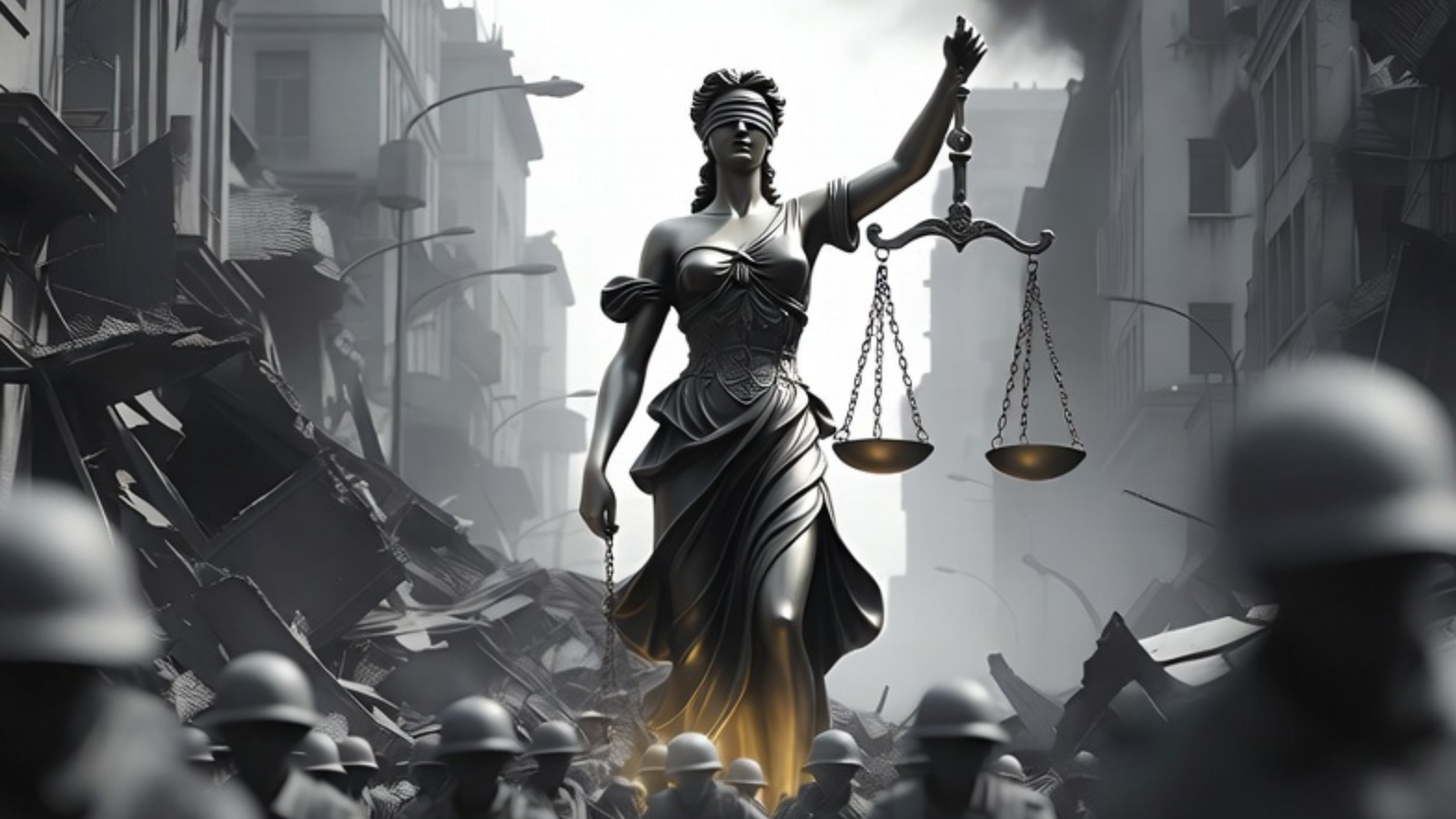
In international humanitarian law, the rulebook looks perfect on paper. The Geneva Conventions, their Additional Protocols, and customary international law define exactly what states and armed groups must not do: target civilians, use torture, starve populations, or destroy essential infrastructure. Yet war after war, those prohibitions read like polite suggestions.
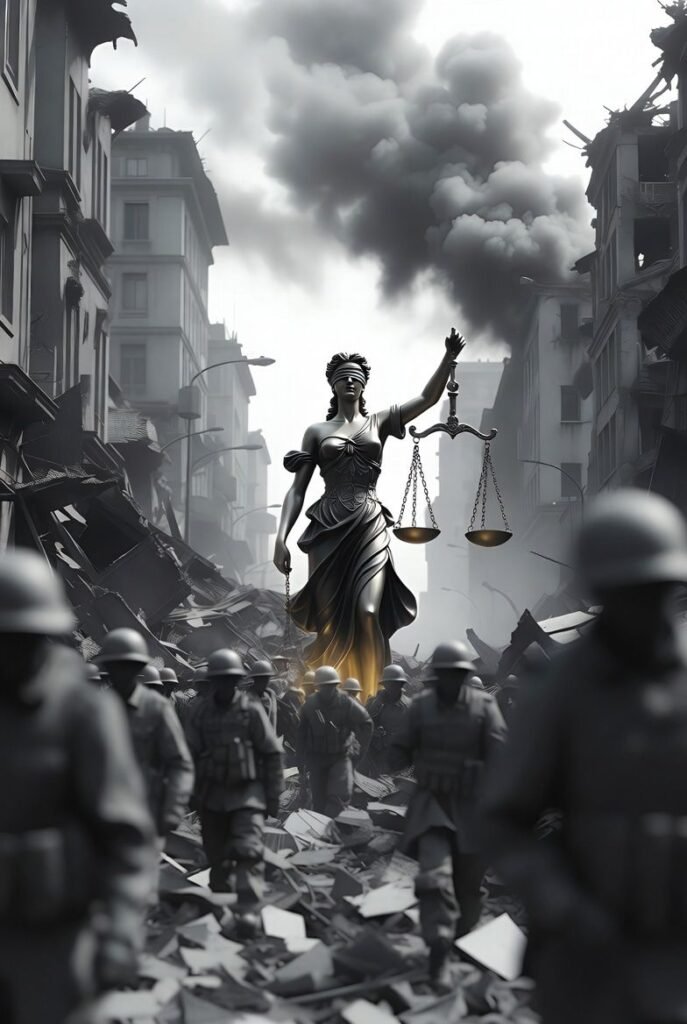
The legal rule is precise. Common Article 3 of the Geneva Conventions binds every party to a conflict, including non-state actors. Protocol I forbids attacks on civilian objects, hospitals, schools, and humanitarian workers. The Rome Statute of the International Criminal Court classifies grave breaches such as willful killing, torture, and inhuman treatment as war crimes. States have a duty to investigate and prosecute, whether domestically or through international mechanisms. The framework is exhaustive.
Reality collapses in the space between law and power. Enforcement depends on political will and access, both scarce during conflict. The International Criminal Court can prosecute only where states accept its jurisdiction or where the UN Security Council refers a case. That Council, paralyzed by veto politics, often does neither. Major powers ignore rulings or withdraw cooperation, making accountability selective. Syria, Yemen, Sudan, Gaza, and Ukraine each demonstrate that compliance rises and falls with geopolitics, not with the strength of the law.
Domestic enforcement is no better. National courts rarely try their own soldiers for violations committed abroad. Universal jurisdiction exists, but only a few European states apply it with consistency. Investigations are slow, evidence disappears, witnesses flee, and governments invoke national security to shield perpetrators. The result is a cycle of impunity that turns legal norms into moral aspirations.
Technology adds another gap. Drone strikes, cyberattacks, and AI targeting blur attribution and make it difficult to identify responsible actors. The law presumes identifiable command structures and intent. Evidence from satellite images or social media is admissible but contested, and the chain of custody is often impossible to prove.
The distinction between the legal rule and enforcement is not theoretical. It defines modern warfare. The rule says civilians must be protected. The practice says they are collateral. The rule says torture is banned absolutely. The practice says it is enhanced interrogation. The rule says starvation cannot be used as a weapon. The practice turns aid into leverage.
International humanitarian law remains the only moral baseline in conflict, but without credible enforcement it is fragile. The gap is not in the text. It is in the political will to make those words binding on the powerful as well as the weak. Until enforcement stops being optional, the law of war will remain a law of convenience.
Leave a Reply