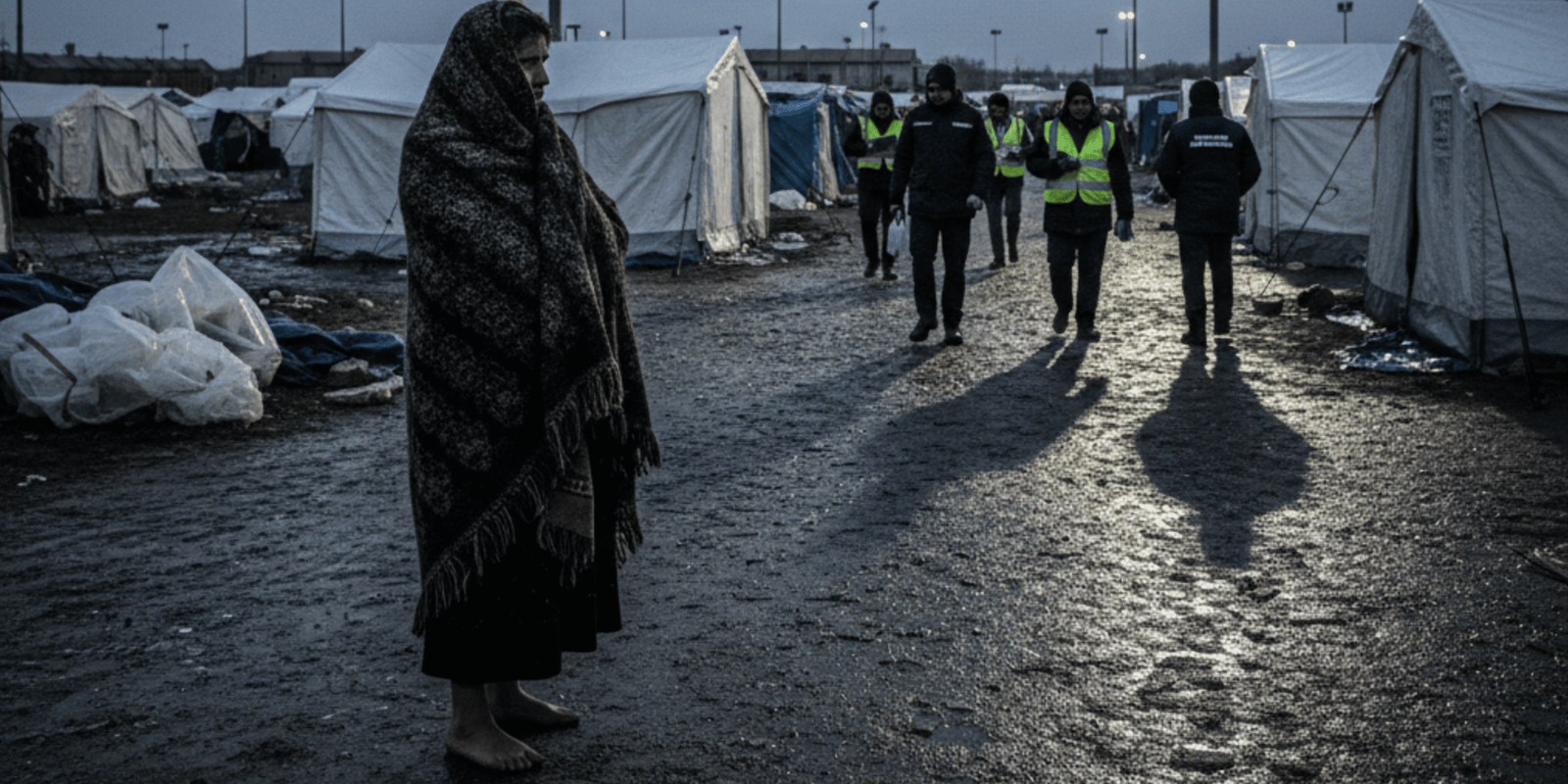
Climate disasters displace people fast and break legal systems even faster. Floods, fires, and storms now force millions into temporary shelters every year. In those spaces, gender based violence rises sharply. That part is not debated. What happens after is.
When a sexual assault occurs in a shelter run by an NGO, placed on public land, filled with people displaced across provincial or national borders, no authority moves first. Police argue territory. Prosecutors argue venue. Courts argue competence. Survivors wait, evidence disappears, and the case dies before it exists.
Climate displacement lives in a legal blind spot. It is usually not classified as armed conflict, so International Humanitarian Law is treated as optional. It is also not treated as migration, so refugee protections fail to apply.
What remains is emergency administration. Emergency administration does not deliver justice. It suspends it. Temporary shelters are created to be fast, flexible, and legally undefined. That undefined status is exactly why abuse goes unpunished.
International law already prohibits sexual violence. The Geneva Conventions and related protocols recognize rape as a serious violation when humanitarian law applies. The problem is that climate disasters are framed as natural events, not humanitarian crises. Once framed that way, responsibility drops to local authorities that are already overwhelmed or non functional. National governments step back. NGOs step in without enforcement power. The law dissolves between institutions.
Survivors are told to report where the crime occurred. Then they are told the shelter has no clear jurisdiction. Crossing borders to file complaints is unsafe or impossible. Reporting inside camps risks retaliation and exposure. Silence becomes the rational outcome. Not because survivors lack courage, but because the system offers no protection.
Governments talk endlessly about climate resilience. Sea walls, evacuation plans, early warning systems. None of that matters if the rule of law stops at the camp gate. A legal system that cannot follow displaced people is not resilient. It is selective. Jurisdiction does not disappear by accident. States choose not to extend it during climate emergencies because doing so creates legal obligations they would rather avoid.
This is the blunt truth. We are building green infrastructure while leaving legal voids where gender based violence thrives. Climate resilience without access to justice is a fiction. Until the law follows people into displacement, accountability will remain temporary, just like the shelters, and violence will continue without consequence.
Leave a Reply